
The Compliance Question
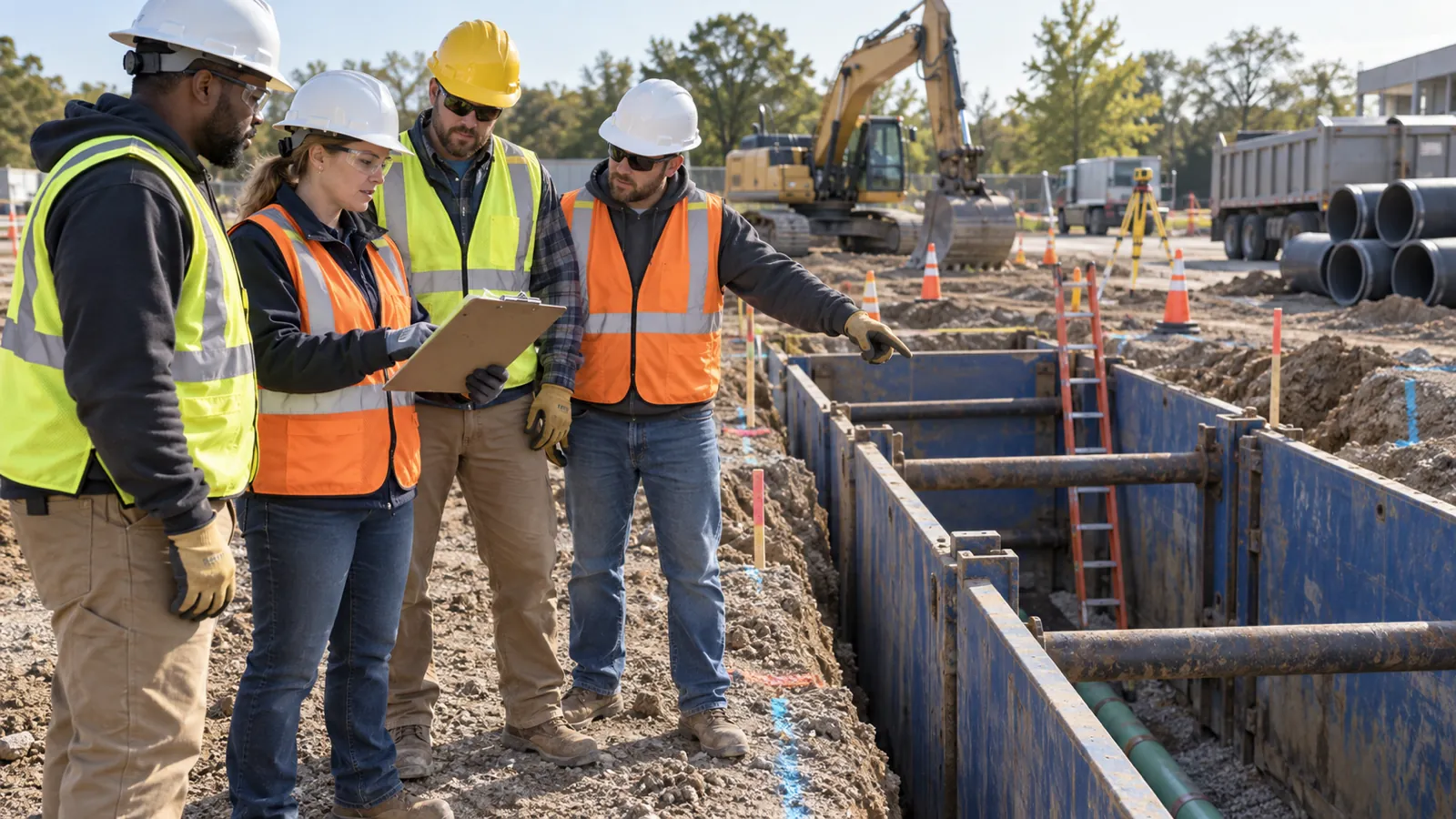
Excavation safety training often gets treated as one topic for one audience. A company schedules a class, sends a few people, files the sign-in sheet, and hopes the jobsite is covered. That approach may be easy to manage, but it does not match how excavation work actually happens. A laborer entering a trench, an operator placing pipe, a foreman coordinating production, a safety coordinator reviewing the plan, and a designated Competent Person making inspection decisions do not all need the same depth of knowledge. They do, however, need a shared understanding of the hazards that can hurt people quickly when excavation controls are weak.
The compliance question for employers is practical: have the right people been trained for the decisions they are expected to make before workers enter an excavation? OSHA excavation requirements focus on protecting employees from cave-ins and related hazards, and they place special weight on the role of the Competent Person. But the Competent Person cannot be the only person on a jobsite who understands trench hazards. Crews need to recognize unsafe conditions, supervisors need to plan work so protective systems are not treated as optional, and managers need to support the time, equipment, authority, and documentation required to do the work safely.
A role-based excavation safety training plan helps employers close that gap. It separates general awareness from task-specific instruction and from Competent Person responsibilities. Instead of asking one course to solve every need, the employer identifies who enters excavations, who directs work, who operates equipment near the edge, who inspects conditions, who selects or verifies protective systems, who manages subcontractors, and who documents compliance. Then training can be matched to those responsibilities.
This matters because excavation hazards do not wait for a weekly safety meeting. Soil conditions can change after rain. Spoil piles can creep toward the edge as production speeds up. A trench shield can be placed without enough thought about access, surcharge loads, or the limits of the system. Underground utilities can create conflicts that were not obvious during the morning briefing. A worker may see sloughing soil, water seepage, cracking pavement, or a missing ladder and assume someone else has already approved the trench. When training is vague, those warning signs are easier to miss.
Employers also need to understand the difference between Excavation, Trenching and Shoring Safety Training and Competent Person for Excavation, Trenching and Shoring Training. Crew-level training helps employees recognize common hazards, follow safe work practices, understand entry controls, and know when to raise concerns. Competent Person training goes deeper into inspection duties, soil classification concepts, protective systems, changing conditions, and the authority to take prompt corrective action. Both levels can be important, but they serve different purposes.
The goal is not to turn every employee into an engineer, inspector, or safety director. The goal is to make sure each role understands the decisions that affect worker exposure. A laborer should know not to enter an unprotected trench. An operator should understand why equipment placement near the edge matters. A foreman should know when production must pause for reassessment. A project manager should understand why the Competent Person must have real authority. A safety manager should be able to audit whether the system is working across crews, shifts, and jobs.
When companies build training around roles, excavation safety becomes less dependent on memory and personality. It becomes a repeatable part of planning, briefing, inspection, and field correction. That is especially important for contractors, municipalities, utility crews, pipeline work, public works departments, and general contractors coordinating multiple employers on the same site.
Why This Matters on Excavation Jobsites
Excavation work combines routine tasks with severe consequences. Crews may dig every week, expose utilities every day, or install pipe so often that the work begins to feel familiar. Familiarity can be useful, but it can also hide risk. A trench that looks similar to yesterday's trench may have different soil, different water conditions, different nearby traffic, different utility conflicts, and different protective system requirements. A worker who has seen hundreds of cuts may still be exposed if the jobsite does not have trained people checking the conditions that matter today.
Role-based training matters because the jobsite is a system. The person in the trench relies on decisions made by people who may never enter the trench. The estimator may have allowed too little time for shoring. The scheduler may have compressed the work after a delay. The project manager may have assumed the subcontractor would provide the protective system. The operator may be asked to stage pipe closer than planned. The foreman may be trying to keep traffic moving while also watching the trench. The Competent Person may be responsible for inspections but not given enough authority to stop work without pushback.
Training cannot remove every conflict, but it can make those conflicts visible. It gives people a common language for risk. When an operator understands surcharge loading, a safety coordinator understands daily inspection triggers, and a superintendent understands the limits of informal field judgment, the company is better positioned to correct problems before entry. When only one person understands the rules, the system becomes fragile.
Excavation hazards also change during the shift. OSHA expects inspections by a Competent Person before work begins and as needed throughout the job, especially after events that could increase hazards. That expectation makes training a daily operational issue, not just an onboarding item. Rain, vibration, freezing and thawing, water accumulation, adjacent loads, changing depth, undermined pavement, damaged utilities, and altered access routes can all require a fresh look. Workers need to know that these changes matter, and supervisors need to know that a previous inspection does not automatically cover new conditions.
A role-based plan also helps with communication. Many excavation incidents develop in the space between what one person noticed and what another person understood. A crew member may see soil falling from the trench wall but describe it casually. An operator may notice the edge cracking but assume it is normal. A foreman may hear that water is entering the trench and decide to finish one more section before stopping. Better training helps people describe conditions clearly and escalates decisions to the person with the authority and knowledge to act.
For employers, the risk is not only a citation after something goes wrong. The larger concern is whether the company has a credible way to protect people when field conditions are changing. Excavation safety failures can cause serious injuries, fatalities, project shutdowns, emergency response complications, utility damage, public disruption, and lasting damage to trust. A training plan that is built around actual job roles supports safer choices before those consequences appear.
Municipal public works crews and utility contractors especially benefit from this approach. Their excavation work may happen under pressure: water main breaks, sewer repairs, storm repairs, road closures, service outages, winter weather, or public complaints. In that environment, the crew still needs a trained process for deciding who can enter, what protection is required, where access belongs, how traffic and equipment affect the trench, and when changing conditions require a pause.
General contractors and controlling employers also need role clarity. When multiple employers work near an excavation, assumptions multiply. One company may provide the trench box, another may supply labor, another may control traffic, and another may schedule equipment. Role-based training helps each employer understand what their people need to recognize and what must be coordinated before exposure occurs. It does not erase contractual responsibilities, but it makes field coordination more deliberate.
What Employers and Supervisors Should Know
The first step is to define roles honestly. Employers should look beyond job titles and ask what people actually do around excavations. A worker may not have "supervisor" in the title but may direct others during small repairs. An operator may influence trench safety through equipment placement, spoil handling, lifting, and communication. A project manager may never touch a shovel but may control whether proper protective equipment is planned and available. A safety coordinator may review records but also need enough field knowledge to identify weak inspection practices.
A practical role-based excavation training plan often includes several levels of responsibility.
- Employees who enter or work around excavations need hazard awareness, entry rules, access and egress expectations, communication procedures, and the confidence to speak up before entering an unsafe trench.
- Operators and drivers need to understand edge distance, spoil and material placement, vibration, adjacent loads, visibility, spotter communication, and why routine movement near the trench can change soil conditions.
- Foremen and supervisors need training on planning, pre-job briefings, production pressure, coordination with the Competent Person, subcontractor communication, and stopping work when conditions change.
- Competent Persons need deeper training on inspections, soil classification, protective systems, water hazards, hazardous atmospheres where applicable, access and egress, changing conditions, and prompt corrective action.
- Managers and safety leaders need enough knowledge to resource the program, audit field execution, evaluate documentation, and support stop-work authority.
This structure helps prevent one common mistake: assuming Competent Person training alone will cover everyone. A trained Competent Person is essential, but that person may not see every behavior at every moment. Workers still need to know that they should not enter a trench without proper protection when it is required. Operators still need to understand why a loaded truck near the edge can matter. Supervisors still need to know that a missing ladder, accumulating water, or shifting spoil pile is not a small housekeeping issue when people are below grade.
Another mistake is treating awareness training as enough for people making higher-risk decisions. A foreman who decides when a crew enters a trench needs more than a basic recognition talk. A person designated as the Competent Person needs training that fits the authority and complexity of the role. That includes understanding the limits of judgment. Soil classification, protective system selection, and inspection decisions should not be reduced to "it looks fine." The person responsible must understand what to check and when to require correction before entry continues.
Employers should also connect training to written procedures. A class can introduce expectations, but the jobsite needs a way to apply them. The company should be able to answer questions such as:
- Who is the Competent Person for this excavation?
- When was the excavation inspected today?
- What changed since the last inspection?
- What protective system is being used, and why is it appropriate for the conditions?
- How will workers enter and exit the trench?
- Where will spoil, pipe, traffic, and equipment be kept?
- What utilities, surface encumbrances, adjacent structures, water, or atmosphere concerns need attention?
- Who has authority to stop entry if conditions are not controlled?
Documentation should support decision-making, not become a substitute for it. A completed inspection form is useful only if the inspection is meaningful. Training should help supervisors and Competent Persons understand what documentation needs to reflect: observed conditions, corrective actions, changes after weather or vibration, protective system checks, access and egress, water control, utility exposure, and communication with the crew. If every form looks identical regardless of site conditions, the documentation may be telling managers that the process has become automatic.
The plan should also address refresher triggers. Excavation training should not be treated as a one-time event that never changes. Refresher training may be needed when a company adds new work types, starts deeper or more complex excavations, hires new supervisors, changes protective equipment, identifies recurring field gaps, experiences a near miss, or sees inspection documentation that does not match jobsite reality. Seasonal changes can also matter for public works and utility crews, especially where wet weather, frozen ground, emergency repairs, or night work change conditions.
Supervisors should understand that role-based training is not about slowing every job. It is about making the right pauses happen before exposure. A short pre-entry conversation led by a trained supervisor or Competent Person can prevent confusion later. That conversation should identify the excavation limits, depth, soil concerns, protective system, access point, spoil placement, nearby loads, utility conflicts, water concerns, traffic exposure, and stop-work expectations. When workers know what has been checked and what should trigger a reassessment, the crew is less likely to normalize risk.
For employers that use subcontractors, role-based training should also be part of pre-job coordination. The employer should clarify who provides the Competent Person, who controls protective systems, who will communicate changing conditions, who can stop entry, and how multiple crews will avoid creating hazards for one another. A subcontractor's presence does not make excavation hazards disappear. Every employer with exposed workers needs to understand how its people will be protected.
How Training Supports a Safer Excavation Program
OSHA-aligned Excavation, Trenching and Shoring Safety Training helps employers give workers a practical foundation before they are exposed to excavation hazards. It can cover common trenching hazards, cave-in risks, protective systems, access and egress, spoil placement, utility awareness, water hazards, inspections, and the importance of following the direction of the Competent Person. For many crew members, that foundation is what allows them to recognize that something is wrong before they step into the trench.
Competent Person for Excavation, Trenching and Shoring Training supports a different need. It helps the designated person understand the role's inspection and corrective-action responsibilities. The Competent Person must be able to identify existing and predictable hazards and must have authority to remove employees from danger. Training can support that role by strengthening knowledge of soil behavior, visual and manual soil evaluation concepts, protective system choices, changing conditions, water, access, spoil, adjacent loads, utilities, and communication with supervisors and crews.
Training is strongest when it is connected to the employer's actual work. A municipal crew repairing water mains may need examples involving streets, traffic control, pavement edges, emergency repairs, and utility congestion. A pipeline contractor may need deeper discussion of long linear excavations, remote sites, equipment movement, and changing soil profiles. A general contractor may need coordination practices for subcontractors and multiple employers. A residential utility contractor may need emphasis on small crews, quick digs, customer property, and keeping the Competent Person role clear even on short-duration work.
Employers should avoid using training as a paper shield. A certificate of completion does not guarantee that a trench is safe, and training by itself does not guarantee compliance. The safer approach is to use training as part of a broader excavation safety program that includes planning, protective equipment availability, inspections, documentation, supervision, clear authority, and corrective action. Training gives people the knowledge to use those controls with better judgment.
A good training plan also makes audits more useful. Instead of asking only whether employees have been trained, managers can ask whether each role has been trained for the decisions it makes. Are laborers clear on when not to enter? Are operators clear on edge loading and spoil placement? Are foremen clear on pre-entry briefings and changed conditions? Are Competent Persons prepared to inspect and stop work? Are project managers planning for protective systems before the crew arrives? These questions turn training from a calendar item into a management tool.
The connection between training and culture is also important. Workers are more likely to raise concerns when they know what to look for and believe supervisors will respond. Supervisors are more likely to pause work when managers have already made safety authority clear. Competent Persons are more effective when their decisions are supported rather than second-guessed only through a production lens. Training cannot create that culture alone, but it gives the company a shared standard for discussing excavation risk.
For excavation employers, the best time to build this plan is before the next job, not after a near miss. Identify the roles, match the training, update the procedures, and make sure the field has the equipment and authority to follow through. When the next trench opens, everyone should know the basics of what must be checked, who makes which decisions, and what conditions require workers to stay out until corrections are made.
Key Takeaway
A safer excavation program depends on more than sending one person to training and hoping the rest of the crew absorbs the message. Different roles shape trench safety in different ways. Workers need awareness before entry. Operators need to understand how equipment and materials affect the excavation. Supervisors need to manage planning, communication, and changing conditions. Competent Persons need deeper training and real authority to inspect, correct, and stop work. Managers need to support the program with time, equipment, documentation, and accountability.
Role-based excavation safety training helps employers align knowledge with responsibility. It makes the company better prepared to control cave-in hazards, protective system decisions, access and egress, spoil placement, utilities, water, adjacent loads, and emergency concerns before workers are exposed. OSHA-aligned Excavation, Trenching and Shoring Safety Training and Competent Person for Excavation, Trenching and Shoring Training can both support that system when employers use them intentionally. The practical next step is simple: identify who influences excavation safety on your jobsites, then make sure each person is trained for the decisions they are expected to make before work starts.