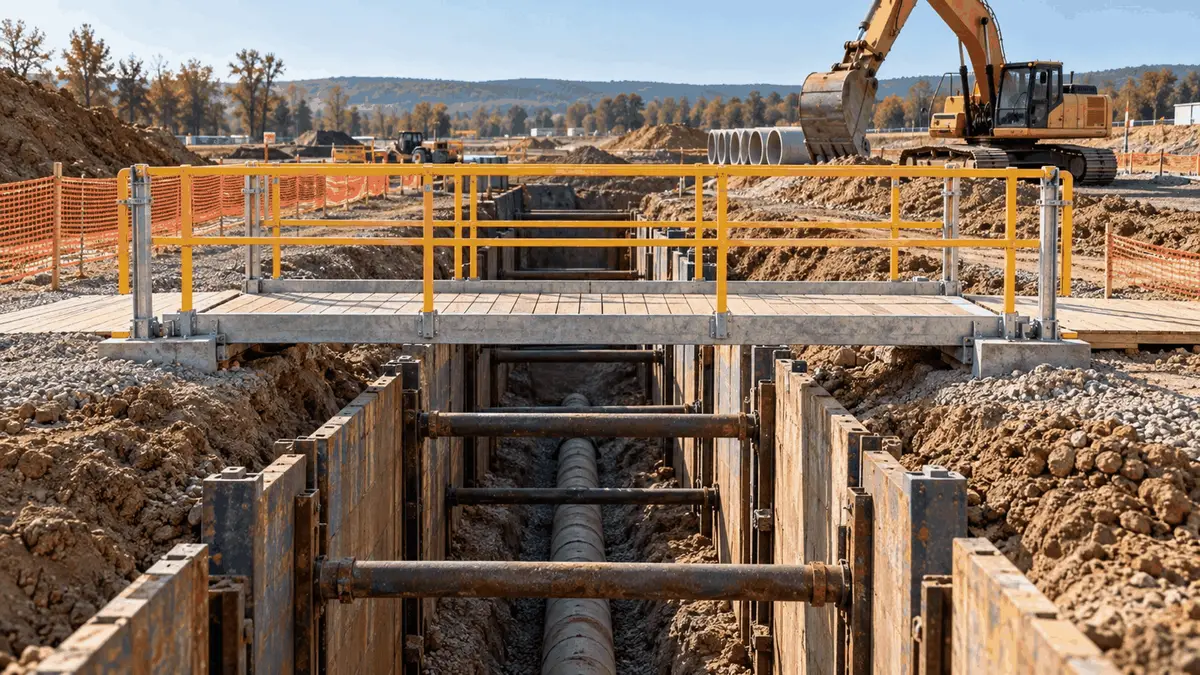
Before trucks, loaders, or stored materials move beside an excavation, a competent person should verify edge setbacks, soil conditions, access, and protection.
Why the Edge Matters
Excavation work changes when a vehicle, pallet, pipe bundle, or spoil pile approaches the edge. The load can add surcharge pressure to the soil, interfere with a protective system, block a ladder, or reduce the room a worker needs to move away from a hazard. A stable-looking lip is not proof that the edge will remain stable after traffic, vibration, rain, or changing soil conditions.
The practical question is not simply how far equipment is parked. The competent person should understand what is behind the edge, how the excavation is protected, where workers will travel, and whether the planned movement changes those conditions. That review connects the daily work plan to the employer duties in OSHA's excavation requirements under 29 CFR Part 1926, Subpart P.
Setbacks also affect visibility. A loader operator may have a clear view of a trench from one position and a blind spot from another. A truck backing toward a cut can swing a corner over the excavation. A spotter may be standing in a place that becomes unsafe when the machine turns. Training helps crews recognize that edge control is an active work practice, not a painted line that remains adequate for every task.
Employer and Supervisor Knowledge
Identify the loads before the shift
Start with a list of equipment and materials that will approach the excavation. Include trucks, excavators, compactors, cranes, forklifts, pipe racks, trench boxes waiting to be installed, and temporary stockpiles. Note whether each item will stop, pass, turn, or work parallel to the edge. The movement pattern can matter as much as the weight.
The supervisor should compare the plan with the protective system and the soil conditions observed at the site. A sloped side, bench, shoring system, or shield has a design basis. It may not be intended to receive a new surcharge or machine vibration. The crew should know who can change the setup and who must recheck it after a change.
Check the physical edge
A useful inspection looks for tension cracks, sloughing, raveling, bulging, water, frozen soil, loose fill, undermined pavement, and signs that the edge has moved. It also checks whether a trench shield has shifted, whether shoring components remain seated, and whether a spoil pile or wheel track has crept closer than planned. These observations should be made from a safe location; the inspection itself must not put a person beside an unsupported wall.
The competent person should consider conditions above and below the edge. Utilities, adjacent foundations, pavement, buried tanks, and previous excavations can change soil behavior. A dry morning does not erase water introduced by a leaking line or overnight rain. When conditions differ from the original plan, the employer should pause the affected work and determine what protection or sequencing change is needed.
Separate people from moving equipment
Edge setbacks are easier to maintain when the work area has defined travel paths. Use barriers, cones, a trained spotter, and a simple communication method where the layout allows. Keep workers out of swing radii and avoid asking a spotter to stand between a machine and the excavation. If a person must approach the edge, the supervisor should identify why, how the person will be protected, and when the machine will stop.
Training Support
Training should give workers a repeatable way to decide when a normal movement requires a new check. A short briefing can cover the excavation depth, protective system, planned equipment route, stop-work signal, spoil and material locations, access points, and changes that require the competent person to reassess. The briefing should use the actual site drawing or a marked-up photo instead of relying on a generic reminder.
Operators need role-specific practice. They should know the approved approach line, where to place wheels or tracks, how to respond when the spotter disappears, and which conditions require stopping. Spotters need to understand that their job is not to make an unsafe movement possible. They should have a clear escape path, stand where the operator can see them, and stop the movement if the plan no longer matches the site.
Workers on foot need a different lesson. They should recognize edge warning signs, avoid walking beneath suspended loads, use designated crossings, and report changes in soil, water, or protective-system position. A worker who sees a crack or a shield movement should be able to stop and report without waiting for a supervisor to notice first.
Document the decision
A useful daily record identifies the excavation location, weather or recent water exposure, protective system, equipment routes, setback controls, inspection time, and person who performed the inspection. It can also record a change such as moving a pipe bundle, changing a truck route, installing a ramp, or extending the excavation. The record is not a substitute for field judgment, but it helps the next shift understand what was checked and what remains controlled.
Photos can support the record when they show the full relationship between the edge, equipment, access, and barriers. Avoid taking a photo from an unsafe position. If a condition cannot be evaluated without entering a danger area, stop and use a safer inspection method or obtain qualified assistance.
Key Takeaway
Treat every edge approach as a work change
The strongest practice is to make edge control part of the movement plan. Before equipment or materials approach, the supervisor confirms the route and the competent person verifies that the protective system and soil conditions support the planned work. After rain, vibration, utility exposure, a new load, or any sign of movement, the affected area is checked again.
Build the check into training
Excavation safety training can reinforce the difference between a planned setback and an unverified assumption. It can also help employers coach operators, spotters, and workers on foot to use one stop signal and one reporting path. The goal is a crew that notices changing conditions early and understands that no delivery schedule justifies entering an area that has not been rechecked.
Employers can use this topic in toolbox talks, supervisor development, and competent-person refreshers. The discussion should remain tied to the actual excavation, protective system, equipment, and job sequence. When the crew can explain what changes require a stop and who will make the next decision, the setback becomes a managed control rather than a guessed distance.
Use the same language across shifts
Day and night crews should use the same names for the edge, access point, stop signal, and inspection record. A handoff can identify the equipment route, the material staging limit, the condition of the protective system, and any question left for the competent person. This avoids a common failure in which one shift assumes that a control was permanent while the next shift treats it as temporary.
Review after nearby work
Utility exposure, dewatering, compaction, demolition, and paving can alter the excavation even when the trench itself was not widened. Supervisors should include nearby work in the change review. If a new vibration source or water source appears, the competent person should decide whether the edge, protective system, or work sequence must be checked again.
The employer can reinforce this habit through short field observations. Ask an operator to point out the approved route, ask a spotter to show the escape path, and ask a worker where to report a crack or water change. These questions reveal whether the written plan has become a usable crew practice.
Plan for deliveries and removals
Material delivery is often where a controlled edge becomes crowded. Before a truck arrives, decide where it will stop, how the load will be unloaded, and how the driver will leave. Keep the delivery route separate from the worker access route when possible. If the truck must turn near the excavation, use a spotter who can stop the movement and who is not trapped between the vehicle and the edge.
Removal work creates similar changes. Spoil, broken pavement, pipe, and shoring components may be staged temporarily while the crew clears an area. A temporary pile can become a new surcharge, obstruct a ladder, or hide a crack. The competent person should include removal and staging in the inspection and should identify when the area must be cleared before people re-enter.
Recheck after weather and vibration
Rain can soften soil, fill an excavation, wash material toward the edge, and change the condition of an access route. Freeze and thaw can open cracks or loosen surface material. Compaction, pile driving, traffic, and nearby demolition can transmit vibration. These conditions do not automatically make the work unsafe, but they are reasons to reassess the affected area before the same movement plan resumes.
The reassessment should be communicated to the crew. Tell workers what changed, what control was added or removed, and what signal means stop. A short, specific explanation helps people understand why a familiar route or parking position is temporarily different.
Sources OSHA, Excavation Standards, 29 CFR 1926 Subpart P, https://www.osha.gov/laws-regs/regulations/standardnumber/1926/1926SubpartP; OSHA, Inspection Procedures for Enforcing the Excavation Standard, https://www.osha.gov/enforcement/directives/cpl-02-00-087