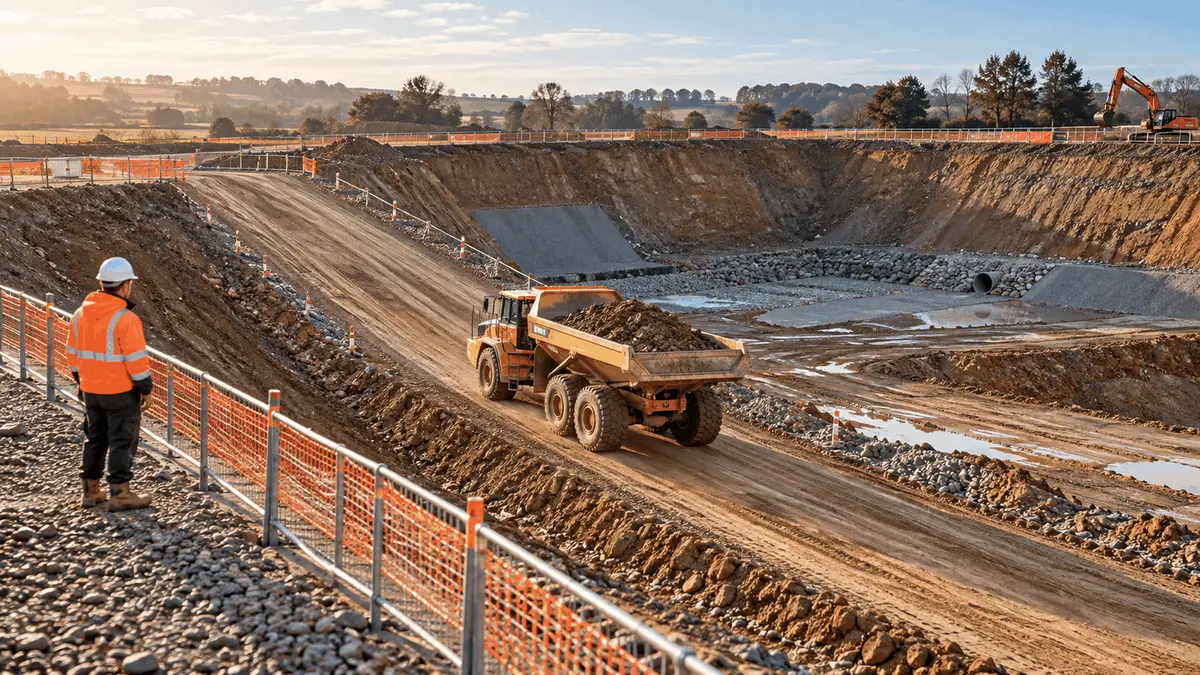
Temporary excavation ramps can become a critical failure point when design, soil conditions, traffic controls, and daily inspections are not aligned.
Ramps look simple because they connect two elevations, but a ramp used around an excavation is part access route, part working surface, and part traffic-control system. Its condition can affect employees on foot, operators moving equipment, protective systems below, and the stability of the excavation edge. A route that worked for a light pickup during site setup may not be appropriate for a loaded haul truck after rain, grading changes, or repeated traffic.
OSHA Subpart P distinguishes a structural ramp from an earth or rock ramp and assigns specific duties for ramps and runways used for employee access. Structural ramps used only by employees must be designed by a competent person. Structural ramps used for equipment must be designed by a competent person qualified in structural design, and the ramp must be built according to that design. The surrounding excavation still requires the broader hazard controls that apply to access, mobile equipment, water accumulation, loose material, and changing conditions.
Why Temporary Ramp Planning Matters
A temporary ramp concentrates movement at a predictable point near an excavation. That concentration is useful for controlling traffic, but it also concentrates loads, vibration, turning movements, loose material, and the consequences of a mistake. A vehicle that leaves the intended path can approach an unprotected edge. A ramp that becomes rutted can change the way an operator steers or brakes. Material sloughing from a ramp can fall toward employees working below.
The ramp also interacts with the excavation geometry. Cutting a route into a slope can remove soil that previously contributed to stability. Building an earth ramp can add surcharge loads. Installing a structural ramp can introduce bearing points near the excavation edge. None of these conditions should be treated as isolated from the competent person's evaluation of the excavation, adjacent loads, soil, protective system, and anticipated work.
Temporary conditions change faster than permanent roadways. Excavation advances, utilities are exposed, spoil locations move, and equipment types change. Rain can soften the running surface or erode the shoulders. Freeze and thaw can create uneven support. A short ramp inspection at the start of a shift may no longer describe the route after hours of loaded traffic. Employers need a plan for both initial acceptance and continued verification.
The ramp may also serve different users. Employees may walk on it during one phase while loaders or trucks use it during another. Those uses create different design and separation questions. A route that is wide enough for one machine may not provide a safe pedestrian path beside it. If employees must cross equipment traffic, the employer should define where and how that interaction is controlled instead of leaving it to informal eye contact.
What Employers and Supervisors Should Know
The first question is what kind of ramp is being used and who will use it. OSHA defines a ramp as an inclined walking or working surface used to gain access from one point to another. A structural ramp is built of steel or wood and is usually used for vehicle access. Ramps made of soil or rock are not structural ramps, but they remain part of the excavation worksite and must be evaluated for the hazards they create.
For a structural ramp used by equipment, the design responsibility is specific. A competent person qualified in structural design must develop the design, and construction must follow it. This is more than selecting boards or steel based on what is available. The design should account for the intended equipment, loading, span, bearing, connections, width, grade, and how the ramp will be supported. If the equipment or configuration changes, the original basis should be checked rather than assumed to remain adequate.
Structural members should be connected so they cannot separate under use. OSHA requires cleats or other means used to connect runway structural members to be attached at the bottom or in a way that prevents tripping. Structural ramps used instead of steps must have cleats or another top-surface treatment to reduce slipping. Those details matter because mud, water, ice, and loose soil can quickly reduce traction.
Employees working in trench excavations four feet or deeper must have a stairway, ladder, ramp, or other safe means of egress positioned so they need no more than 25 feet of lateral travel. An equipment ramp does not automatically satisfy that requirement. Its grade, traffic, surface, location, and availability must actually make it a safe means of egress for employees. A route blocked by a parked machine or active truck movement is not reliably available when a worker needs to leave.
Mobile-equipment controls apply where operators approach an excavation edge without a clear and direct view. OSHA identifies warning systems such as barricades, hand or mechanical signals, and stop logs. Employers should determine which control fits the route and should keep it functional as the edge, travel path, and visibility change. A faded paint line or an informal instruction may not provide an operator with a dependable physical reference.
Building the Ramp Into the Excavation Plan
Start by defining the intended use. List each vehicle or machine expected on the ramp, including attachments, loaded weights, axle or track configuration, and whether two-way traffic is possible. Document pedestrian use separately. The ramp should not quietly become a general access route for equipment that was never considered during planning.
Review the planned ramp location with the excavation layout. Look at underground installations, overhead lines, spoil piles, lifting areas, protective systems, dewatering equipment, and employee access points. The most direct path is not always the safest. A ramp aligned with a trench may send equipment toward an edge or place traffic above workers. A turn near the crest may create side loading or poor visibility.
For an earth ramp, evaluate the soil and how the ramp will be placed, compacted, drained, and maintained. Loose fill can rut or shift under traffic. Water should not be allowed to flow down the ramp into the excavation or collect at its toe. Side slopes and shoulders need attention because erosion or wheel encroachment can narrow the usable surface. The competent person should consider whether the ramp changes the excavation's protective-system assumptions or creates surcharge loads near a face.
For a structural ramp, keep the approved design at the jobsite and make it usable for field verification. Identify member sizes, connection details, bearing locations, maximum intended load, and any restrictions. Inspect materials before installation for damage, deterioration, distortion, or contamination that could affect performance. Field substitutions should be reviewed by the person responsible for the design instead of accepted because they appear similar.
Define traffic rules before the route opens. These may include one-way movement, maximum speed, minimum following distance, spotter locations, communication signals, lighting, wheel or track limits, and restrictions during rain or low visibility. If backing cannot be eliminated, the plan should address the operator's view and the role of any spotter. Employees should know where they may stand and where they must not stand while equipment uses the ramp.
Separate walking from equipment movement when feasible. If a shared route is unavoidable, schedule uses so employees are not walking beside moving equipment and establish positive control over entry onto the ramp. Consider an alternate employee egress route so a machine breakdown, parked vehicle, or damaged ramp does not remove the crew's only way out.
Inspection Points for the Competent Person
The competent person should inspect the excavation, adjacent areas, and protective systems daily before work and as needed during the shift. An inspection is also required after rainstorms or other hazard-increasing events. The ramp belongs in that inspection because its condition can change the hazards at the excavation.
At the upper approach, check for cracks, settlement, rutting, edge deterioration, and displaced warning devices. Confirm that stop logs, barricades, lighting, or spotter positions still match the travel path. Look for new stockpiles, parked equipment, or materials that reduce visibility or add load near the edge.
On the ramp surface, look for mud, standing water, ice, loose aggregate, damaged traction treatments, deep ruts, abrupt grade changes, and debris. A smooth path is not enough; the surface needs to support controlled steering, braking, and walking for its planned users. For structural ramps, inspect connections, bearing, alignment, deflection, damaged members, and any movement relative to the excavation.
At the lower approach, verify that equipment can enter and leave without striking shoring, shields, utilities, ladders, pumps, or employees. Confirm that the route has not become narrower as excavation work progressed. Check whether material falling from tires or the ramp could reach people working below and whether cleanup procedures are keeping the area usable.
Observe actual traffic, not just the ramp at rest. Tire spin, scraping, repeated steering correction, excessive bounce, or operators avoiding one side are warning signs. So are near misses between pedestrians and machines. These observations may show that the route does not function as planned even when no obvious material damage is present.
Document restrictions and corrections clearly. If the ramp is closed, identify how it is physically blocked and who can authorize reopening. A verbal warning may be forgotten at shift change. The record should connect the observed condition, the action taken, and the verification completed before use resumed.
Training Support for Supervisors, Operators, and Crews
Training should translate the ramp plan into role-specific actions. Supervisors need to understand the design basis, traffic restrictions, inspection triggers, and authority to stop use. Operators need to know the designated path, speed, signals, visibility controls, and what conditions require them to stop. Employees on foot need to recognize exclusion zones and understand which route remains available for egress.
Competent-person training can help designated personnel connect ramp observations to the broader excavation assessment. A rut is not just a maintenance issue if it directs equipment toward an edge. Water on a ramp is not just a traction issue if it drains into the trench. A shifted bearing is not just a structural detail if it changes the loading near an excavation face.
Jobsite briefings should address the equipment and conditions expected that day. If a heavier machine arrives, the crew should know that previous use does not establish capacity. If weather changes, the inspection plan should respond. If the ramp moves with the excavation, the new location requires the same disciplined review as the first one.
Practical exercises can improve recognition. Supervisors can walk the approach from the operator's point of view, identify blind areas, and test communication signals. Crews can practice closing the route and using alternate egress. The goal is not memorizing a checklist; it is building a shared understanding of how ramp condition affects the entire excavation system.
Key Takeaway
A temporary excavation ramp should be treated as an engineered and actively managed part of the jobsite, not as a convenient pile of fill or a few structural members. Its design, intended users, traffic controls, drainage, relationship to the excavation, and inspection history all matter.
Employers can strengthen ramp safety by defining use before construction, keeping designs and restrictions available, separating people from equipment, and requiring renewed inspection after changing conditions. Supervisors and competent persons should watch how the route performs during real work and stop use when the surface, support, visibility, or surrounding excavation no longer matches the plan.
Training supports these duties by helping each role recognize limits, communicate changes, and act before a small defect becomes a loss-of-control event. The final question is not whether equipment crossed the ramp yesterday. It is whether today's ramp, excavation, equipment, and controls still form a safe system for the work now being performed.
Sources
Occupational Safety and Health Administration, 29 CFR 1926.650, Scope, Application, and Definitions: https://www.osha.gov/laws-regs/regulations/standardnumber/1926/1926.650
Occupational Safety and Health Administration, 29 CFR 1926.651, Specific Excavation Requirements: https://www.osha.gov/laws-regs/regulations/standardnumber/1926/1926.651